


AI
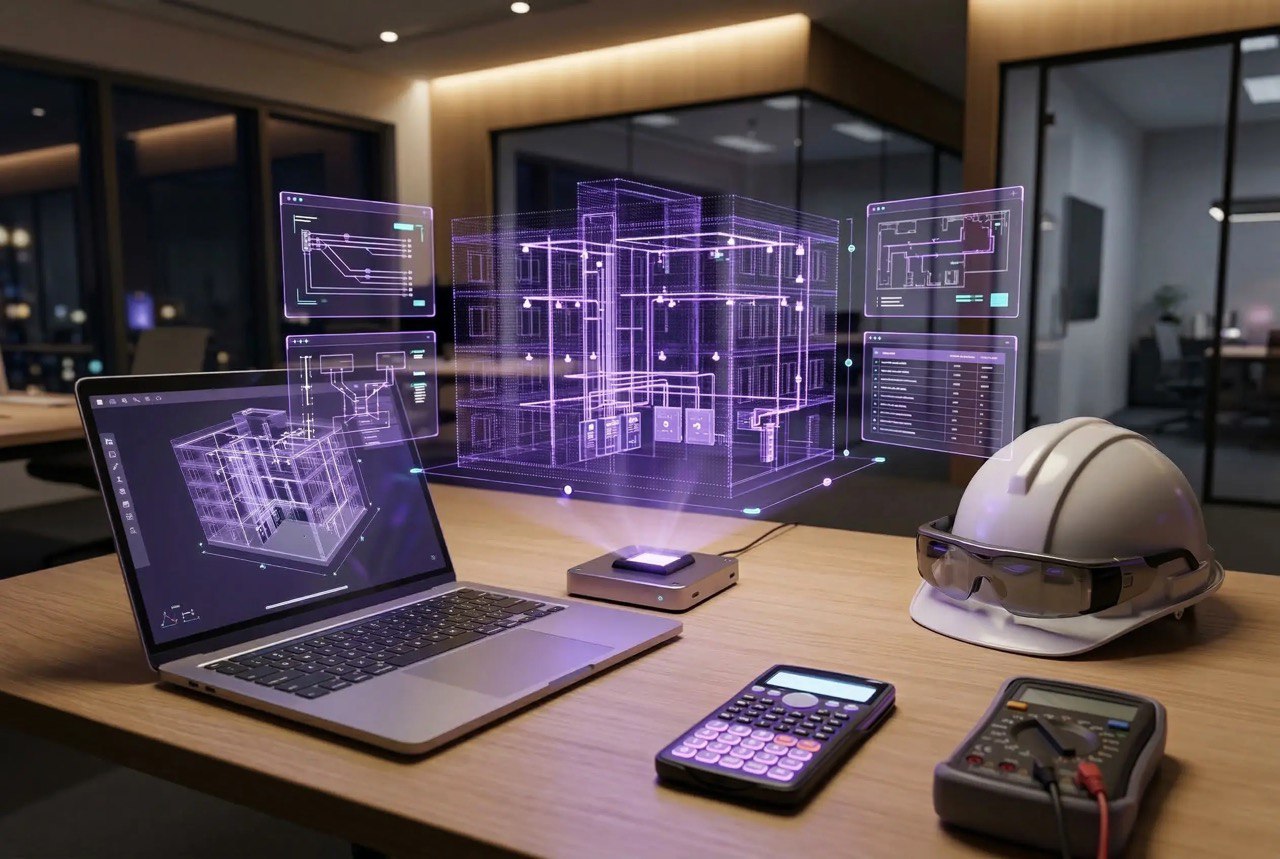
Technology in construction is fundamentally transforming the way electrical contractors approach their work. It now plays a critical role in enhancing processes such as estimating, project coordination, and field execution. With the integration of new technologies, tasks that were once manual and time-consuming are becoming more efficient, accurate, and streamlined.
Table of Сontents
Advancements in construction technology are reshaping electrical estimating by introducing tools like AI-driven takeoff software, which increases accuracy and reduces human error. In project coordination, digital platforms enable better communication and collaboration among team members, ensuring that everyone is aligned throughout the project lifecycle. On the job site, automation and digital tools are improving field execution, making installations faster and reducing rework.
The adoption of these technologies is setting new expectations for efficiency, quality, and collaboration in electrical contracting. Contractors must be prepared to embrace these tools to stay competitive and deliver projects on time and within budget.
Construction technology refers to the specialized tools, software, and systems developed specifically to improve processes and outcomes in the construction industry. For electrical contractors, construction technology encompasses a range of solutions designed to make tasks such as estimating, project coordination, and field execution more efficient, accurate, and collaborative. The use of advanced technology is fundamentally changing how electrical contractors plan and deliver projects, replacing manual and time-consuming activities with automated, streamlined approaches.
In practice, construction technology consists of purpose-built applications, devices, and platforms that address the unique challenges faced by contractors on construction projects. These technologies include AI-driven takeoff tools, Building Information Modeling (BIM) software, field management apps, robotics, and connected devices powered by the Internet of Things (IoT). They are designed not just for general business efficiency but to solve specific project-site problems, such as improving the accuracy of material estimates, facilitating real-time collaboration between teams, and automating installation processes.
For electrical contractors, construction technology means leveraging modern tools and systems to optimize how projects are estimated, coordinated, and executed in the field. It is about adopting solutions that streamline workflows and increase productivity while minimizing errors and rework.
Unlike generic office IT systems—such as email and spreadsheets—construction technology is tailored to the demands of the job site and project delivery. Tools like AI-powered takeoff software, BIM platforms, field management apps, robotics, and IoT devices are specifically designed to address construction challenges. These project-focused technologies enable electrical contractors to improve accuracy, efficiency, and collaboration, setting them apart from standard office tools that do not directly enhance construction project execution.
One emerging tool in this space is drawer AI, which assists contractors in organizing and managing project documents, drawings, and specifications more efficiently. Drawer AI uses advanced search and categorization algorithms to quickly retrieve relevant information, ensuring teams have access to the right documents when needed. This technology streamlines workflows, reduces the risk of misplacing important files, and enhances collaboration by making project data easily accessible to all stakeholders.
Construction technology relevant to electrical contractors can be categorized into several main types. Each category addresses specific needs within the construction process, supporting electrical professionals in optimizing project delivery, increasing productivity, and improving collaboration. Below is a high-level overview of these categories, which will be explored in greater detail later.
This category includes solutions like AI-powered takeoff tools, estimating platforms, and bid management systems. These technologies help electrical contractors quickly and accurately quantify materials, generate cost estimates, and manage bids. By automating manual takeoff and estimation tasks, these tools increase precision and efficiency during the early project phases, enabling contractors to submit competitive bids and better plan project resources.
Design and coordination technology encompasses tools such as Building Information Modeling (BIM), clash detection software, and model-based coordination platforms. These technologies allow electrical contractors to visualize and coordinate electrical systems within the overall building model, identify potential conflicts with other trades, and streamline the design process. BIM and related tools ensure that electrical layouts are accurate, coordinated, and ready for installation, reducing the risk of costly rework.
On the job site, technologies like tablets and field management apps, augmented and virtual reality (AR/VR) for layout, equipment tracking solutions, and site sensors play a vital role. These tools provide real-time access to project plans, facilitate precise field layout using AR/VR, and help track equipment and monitor conditions on site. For electrical contractors, this enhances communication, supports accurate installation, and improves safety and resource management.
This category includes prefabricated assemblies, robotic layout tools, and cable-pulling aids. Prefabrication allows electrical components to be assembled off-site, reducing installation time and minimizing errors. Robotic layout and automation tools further streamline repetitive or complex tasks, improving efficiency and ensuring consistent quality in electrical installations.
Data and collaboration technologies, such as common data environments (CDEs), document control systems, and RFI/submittal workflow platforms, support the management and sharing of project information. These platforms ensure that electrical contractors and project stakeholders have access to the latest documents, drawings, and communications, facilitating smoother collaboration and reducing the likelihood of miscommunication or delays.
Each of these technology categories plays a distinct and critical role in supporting electrical contractors throughout the project lifecycle, from planning and design to execution and closeout. By leveraging these specialized tools, electrical professionals can address unique challenges on construction projects and achieve greater project success.
For electrical contractors, the preconstruction phase has traditionally been fraught with tedious and time-consuming tasks. Manual plan review often requires combing through extensive PDF drawings, identifying every electrical symbol, and counting devices such as fixtures, receptacles, panels, and branch circuits one by one. These quantities must then be painstakingly recorded in spreadsheets—a process that is not only labor-intensive but also prone to human error. Spreadsheet-based takeoff, while familiar, makes it challenging to ensure accuracy, often leading to inconsistent estimates and missed opportunities in competitive bidding.
The introduction of AI-powered takeoff technology marks a significant shift in how electrical contractors approach these challenges. As a core use of technology in construction for the electrical trades, AI takeoff solutions automate the reading of PDF drawings, rapidly identifying all relevant electrical devices and components within the plans. The software then produces precise quantity tables, eliminating the need for manual symbol counting and significantly reducing the risk of mistakes.
One of the key advantages of AI-powered takeoff is its seamless integration with estimating templates and bid management workflows. The quantity tables generated by the AI can feed directly into established estimating processes, enabling contractors to quickly produce accurate cost estimates and assemble competitive bids. This streamlined approach not only saves valuable time but also enhances precision in the early project phases.
For example, an electrical contractor bidding on a large commercial project can use AI takeoff to process hundreds of drawing pages in hours rather than days, ensuring every device is counted and accounted for. On a smaller job, the technology can quickly extract all required device quantities, allowing the estimator to focus on pricing and strategy instead of manual data entry.
Drawer AI exemplifies the new generation of AI-powered takeoff solutions that are transforming preconstruction workflows for electrical contractors. By automating the identification and counting of devices directly from digital drawings, Drawer AI helps eliminate manual errors, accelerates quantity takeoff, and enables more accurate estimating. This allows professionals to devote more time to strategic decision-making rather than data entry. For those interested in exploring the full capabilities and features of Drawer AI, please go check it out.
Design and coordination technology: BIM and model-based workflows (250–300 words)
BIM (Building Information Modeling) and model coordination play a critical role in electrical work by enabling the planning of coordinated routes, facilitating clash detection with HVAC and structural elements, and ensuring accurate elevations and clearances. With BIM, electrical contractors can visualize and optimize cable paths, conduit runs, and device locations within the context of the overall building design. This integrated approach helps prevent conflicts with other trades, such as HVAC ductwork or structural framing, and allows for precise placement of electrical systems, reducing rework and improving efficiency.
Estimators and project managers leverage BIM models to validate quantities, gain insight into routing complexity, and identify high-risk zones. By extracting data directly from the coordinated model, they can confirm the number of materials and devices required, assess how challenging it will be to install systems through congested areas, and pinpoint locations where conflicts or access issues may arise. This information supports more accurate estimating, risk assessment, and resource allocation throughout the project lifecycle.
BIM is widely recognized as a key technology in construction, particularly for complex projects where coordination and precision are paramount. However, for very small jobs, the use of BIM may be unnecessary or excessive, as the benefits may not justify the additional time and resources required to implement the technology.
Modern construction site technology is transforming how electrical crews operate, streamlining workflows and improving project outcomes. Several tools and digital solutions now play a central role in daily operations, ranging from mobile devices and field management apps to advanced layout tools and emerging automation technologies.
Field management applications are essential for managing tasks such as Requests for Information (RFIs), punch lists, and daily logs. These apps allow electrical crews to document issues, track progress, and communicate in real time. By digitizing these processes, crews can quickly resolve questions, address punch list items, and maintain accurate records, reducing delays and miscommunication on the jobsite.
The use of tablets loaded with digital plans has largely replaced the traditional reliance on paper drawings. Electrical teams can access up-to-date plans directly from their devices, ensuring everyone is working from the latest information. This approach reduces errors due to outdated documents and allows for immediate updates or markups, enhancing coordination and productivity.
Technology such as laser layout tools, which can be directly tied to digital models, enables precise installation of electrical components. Asset tracking systems help crews monitor equipment and materials, preventing loss and ensuring necessary resources are available when needed. Site cameras and sensors contribute to safety by monitoring conditions and alerting crews to potential hazards, supporting compliance and accident prevention.
For example, a foreman uses a tablet to review the day’s updated plans, assigns tasks via a field management app, and employs a laser layout tool to mark conduit runs with accuracy. Site cameras monitor activity, while asset tracking ensures all required materials are on hand. This integrated technology approach keeps the project moving efficiently and safely.
Looking ahead, the near future promises further advances in site automation. Robotic total stations and layout robots are beginning to automate installation tasks, while semi-automated cable pulling tools are poised to reduce manual labor and improve efficiency. These innovations represent the next wave of construction technology, set to further enhance productivity for electrical crews.
Developing a practical technology stack is essential for electrical contractors looking to stay competitive while managing costs and complexity. The key is to build a maturity path that starts with core digital basics and progressively integrates more advanced tools as the business grows.
The foundation of a realistic tech stack begins with standardized digital tools such as spreadsheets and shared drives for organizing information and collaborating on documents. PDF markup solutions streamline the review and approval of plans and drawings. As contractors seek greater efficiency, adopting an AI-powered takeoff and estimating platform can significantly speed up and improve the accuracy of bids. For larger or more complex projects, integrating Building Information Modeling (BIM) and coordination platforms helps identify clashes and manage changes more effectively. Finally, field management and site automation tools enable better real-time communication, document access, and task tracking across the jobsite.
Choosing the right tools involves focusing on trade-specific features that meet the unique needs of electrical contractors. The technology should be easy for both estimators and field teams to adopt, minimizing training time and resistance. Seamless integration with existing systems—such as accounting, project management, and BIM software—ensures information flows smoothly without creating data silos or additional headaches.
To maximize success, contractors should pilot one or two new tools at a time. This approach allows teams to measure the impact on key metrics, such as win rates, estimating time, the number of RFIs, and rework required. By taking a measured and incremental approach, electrical contractors can build a tech stack that delivers real value without overwhelming their teams.
Building a practical technology stack is crucial for electrical contractors who want to maintain a competitive edge while keeping complexity and costs in check. By starting with digital basics and gradually adopting more advanced solutions, teams can streamline workflows, improve collaboration, and make smarter decisions in the field. Carefully selecting trade-specific tools that integrate seamlessly with existing systems ensures a smooth flow of information and minimizes the risk of data silos. Piloting new technologies one step at a time allows contractors to measure their real impact and avoid overwhelming their teams. Ready to see these benefits in action? Schedule a Drawer AI demo today to explore how the right tech stack can transform your business.
Construction technology refers to the collection of digital tools, software, and processes used to enhance the planning, execution, and management of construction projects. It includes methods and solutions that help contractors improve efficiency, accuracy, and collaboration throughout the construction lifecycle.
Common technologies used in construction include spreadsheets and shared drives for organizing information, PDF markup solutions for reviewing plans, AI-powered takeoff and estimating platforms, Building Information Modeling (BIM) and coordination tools, as well as field management and site automation applications. These technologies streamline workflows and facilitate better communication among project teams.

14425 Falcon Head Blvd
Building E, Suite 100,
Austin, TX 78738
Created by Estimators, Powered by AI and Innovation
Copyright © 2026 Drawer AI. All rights reserved.