
AI



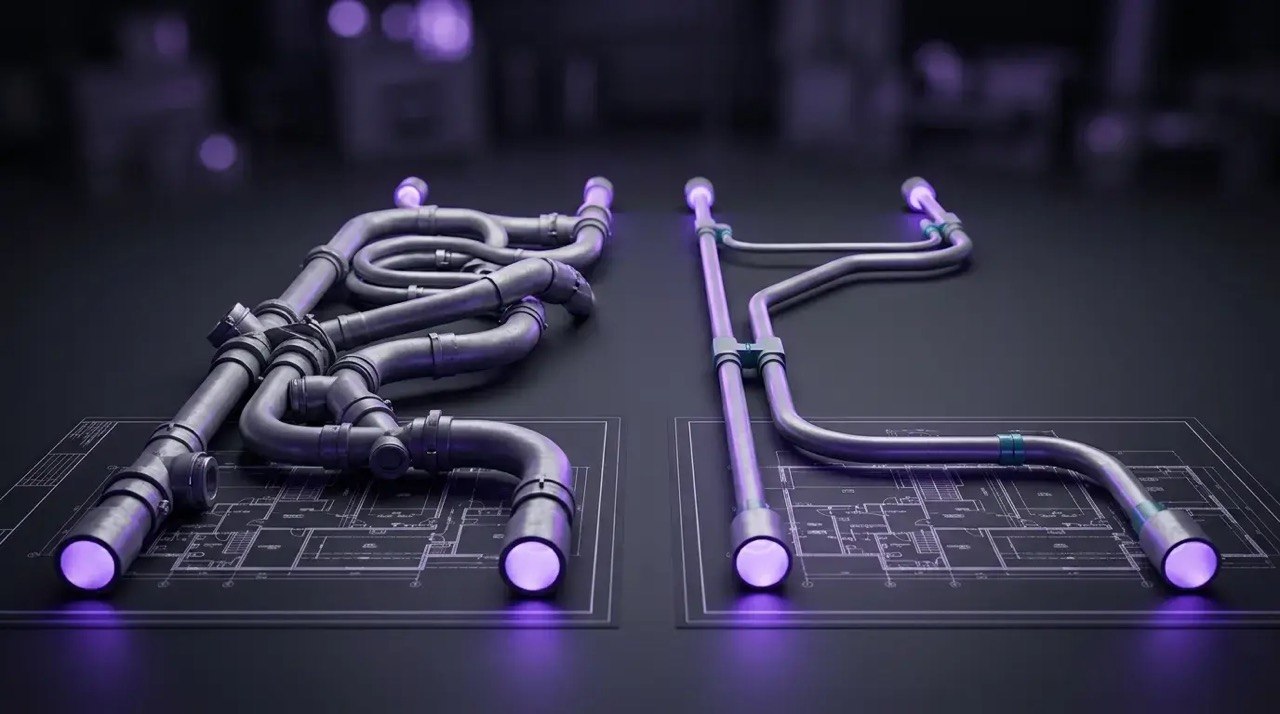

Value engineering is vital in electrical construction, enabling estimators to boost efficiency and reduce costs without compromising essential project requirements. Rather than simply finding the cheapest options, estimators use a systematic approach to balance quality, functionality, and budget. Their expertise ensures project changes meet both financial targets and stakeholder expectations, making value engineering a key factor in project success.
Table of Сontents
A common scenario for electrical estimators involves receiving a value engineering request from the general contractor (GC) when a project exceeds its budget. For example, imagine a project that is $150,000 over budget and the estimator is given only 48 hours to respond. This tight timeline is typical and highlights the pressure estimators face to deliver solutions that meet financial targets while maintaining project integrity. The ability to quickly analyze options and present viable alternatives is a core part of the estimator’s responsibilities during value engineering discussions.
Definition of Value EngineeringValue engineering, in brief, is the process of systematically analyzing project components to identify ways to reduce costs or enhance value without compromising essential function or quality. For estimators, this reality means constantly seeking innovative approaches and collaborating closely with project teams to ensure that proposed modifications align with both budget constraints and operational requirements.
Value engineering is a systematic process that optimizes project cost and performance by thoroughly evaluating materials, equipment, and installation methods. Unlike basic cost-cutting, it ensures proposed changes preserve essential quality and function. This approach uses brainstorming, functional analysis, and alternatives review to deliver maximum value.
Developed during World War II by Lawrence Miles at General Electric, value engineering emerged from the necessity to find innovative solutions amid material shortages. Its focus extends beyond merely cutting costs it also emphasizes maintaining or enhancing project functionality. For instance, in the construction industry, value engineering might lead to the selection of prefabricated components that reduce labor costs and speed up project completion without sacrificing quality. Rather than simply opting for less expensive materials, the process could involve choosing products with superior warranties, easier installation, or longer life spans. By applying value engineering, companies can foster innovation, improve product reliability, and enhance customer satisfaction, leading to long-term competitive advantages.
In electrical construction, value engineering involves making smarter decisions about materials, installation methods, and equipment to meet project requirements at a lower cost. Some key strategies include:
Proposing prefabricated assemblies to streamline installation. Prefabricated assemblies are components built off-site and delivered ready for installation, helping save time and labor on the project.
All suggestions are carefully reviewed with the project team to ensure they meet specifications and project goals.
SAVE International supports the practice by offering standards, education, and certification programs. Their resources help professionals ensure value engineering remains effective, ethical, and produces tangible benefits for clients and projects.
The value engineering process in electrical construction is organized into six distinct phases, following the standard SAVE Job Plan and adapted specifically to the needs of electrical projects. This structured approach enables estimators and project teams to systematically identify and implement cost-saving measures without compromising essential functions or quality.
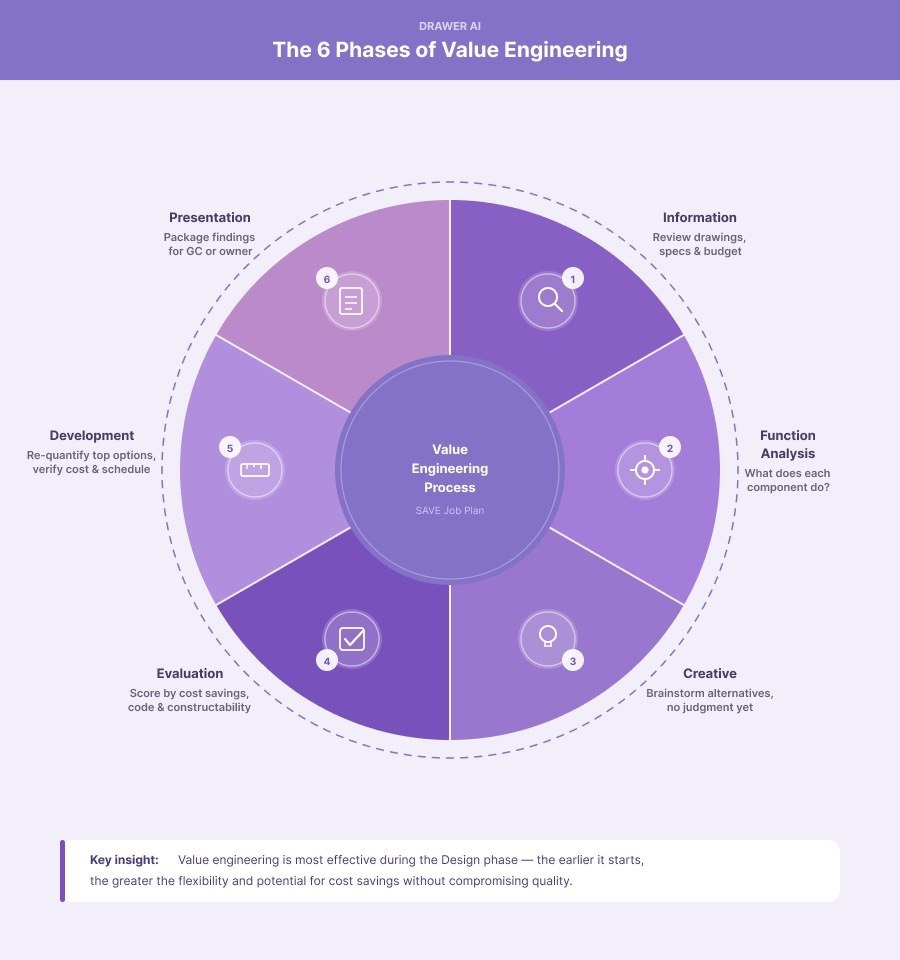
The first step involves thoroughly reviewing all available project documentation, including drawings, specifications, and budget constraints. By understanding the project’s scope and requirements in detail, estimators lay the foundation for the value engineering process. This phase ensures that every subsequent decision is informed by accurate and comprehensive information about the project’s objectives and limitations.
Next, each component of the electrical system is analyzed to determine its specific function. The focus is on understanding what each part is designed to do, rather than just its physical characteristics. This functional perspective allows the team to consider whether alternative solutions could fulfill the same purpose, potentially at a lower cost or with enhanced performance.
During the creative phase, the team brainstorms a range of possible alternatives for materials, methods, or equipment. Ideas are generated without immediate judgment, encouraging innovation and out-of-the-box thinking. The goal is to develop a broad selection of potential strategies that might improve value while maintaining all critical functions and requirements.
All proposed alternatives are then evaluated and scored based on several key criteria: cost savings, compliance with applicable codes, and constructability. This careful assessment ensures that only feasible options proceed, balancing budget considerations with practical and regulatory requirements. The team closely examines each alternative to ensure it can be implemented successfully within the project’s constraints.
In the development phase, the most promising alternatives are re-quantified. This involves detailed calculations to verify their impact on the project’s cost and schedule. The team refines the selected options, preparing them for presentation and potential adoption. Accurate quantification is essential to ensure that the recommended changes deliver tangible benefits.
The final phase involves packaging the developed alternatives into a clear, organized presentation for the general contractor or project owner. All findings, recommendations, and supporting data are compiled, enabling stakeholders to make informed decisions. This presentation is critical for communicating how the proposed changes meet both financial targets and project requirements, ensuring transparency and buy-in from all parties involved.
Electrical value engineering (VE) is a systematic process in construction projects aimed at improving efficiency and reducing costs without sacrificing quality or performance. By carefully analyzing electrical systems and identifying opportunities for substitution, modification, or optimization, project teams can achieve significant savings. The following examples showcase practical VE strategies that have been successfully implemented to deliver cost benefits while maintaining essential functions and compliance.
This section presents ten practical electrical value engineering (VE) substitutions, highlighting both their potential cost savings and important considerations or caveats. The following examples illustrate how changes such as switching material types, optimizing equipment placement, or consolidating electrical circuits can have a measurable impact on project budgets.
When considering VE strategies, it is crucial to review installation requirements, local code compliance, and long-term reliability to ensure that cost savings do not come at the expense of safety or functionality. By carefully assessing each option, project teams can maximize value and deliver solutions that meet both financial targets and operational needs.
Aluminum vs. Copper Feeders
Switching from copper to aluminum feeder cables can substantially reduce material costs. However, it is essential to account for differences in ampacity, installation requirements, and local code compliance.
Loadcenters vs. Panelboards
Using loadcenters instead of traditional panelboards may offer savings, especially in residential or light commercial applications. Review the functional requirements and ensure compatibility before making this substitution.
Cable Tray vs. Conduit
Replacing conduit runs with cable trays can save on labor and materials. Consider project-specific factors such as environmental conditions and cable support needs.
Panel Relocation
Relocating electrical panels to more accessible or cost-effective locations can streamline installation. Evaluate impacts on wiring runs and compliance with accessibility codes.
Circuit Consolidation Consolidating circuits reduces the number of breakers and wiring needed, lowering costs. Ensure that consolidation does not compromise system reliability or violate code requirements.
EMT vs. RMC Using Electrical Metallic Tubing (EMT) instead of Rigid Metal Conduit (RMC) can decrease material and labor expenses, provided that EMT meets all required specifications for the installation environment.
Fixture Substitution Selecting alternative lighting fixtures with lower costs or improved energy efficiency can deliver savings. Confirm that substitutes meet project lighting standards and aesthetic goals.
Delete Concrete Encasement Eliminating concrete encasements for certain underground conduits can reduce material and installation costs. This change must be carefully evaluated for code compliance and protection needs.
LED Reducing Circuit Count Using LED fixtures, which often require fewer circuits due to lower power consumption, can lead to savings in wiring and distribution equipment. Validate that circuit reductions align with code and performance requirements.
Prefabricated Conduit Assemblies Implementing prefabricated conduit assemblies can minimize onsite labor and material waste. Assess logistics and coordination needs for successful integration.
Each example above demonstrates how thoughtful electrical VE strategies can improve project value while maintaining essential functions. Caveats and careful review are necessary to ensure compliance, performance, and successful implementation.
Value engineering (VE) plays a critical role in electrical projects, and its timing can significantly impact both cost savings and project outcomes. The process generally occurs at three distinct stages: the design phase, the bidding phase, and during construction.
The design phase is when value engineering is most effective. At this early stage, electrical engineers and project teams can evaluate different systems, materials, and layouts to optimize costs and performance. Decisions made here can influence the entire project, allowing for the greatest flexibility and potential savings.
During the bidding phase, VE often manifests as alternate pricing. Contractors may suggest alternative products, installation methods, or system configurations to offer more cost-effective solutions. These suggestions are typically included in bid proposals and reviewed by general contractors (GCs) and owners for potential adoption.
In the construction phase, value engineering tends to be more reactive. Changes are proposed to address unforeseen site conditions, budget constraints, or schedule pressures. While adjustments at this stage can still yield savings, they may be limited by existing design and procurement commitments.
For electrical subcontractors, VE requests frequently originate from general contractors after bids have been submitted. GCs may ask subs to revisit their proposals and identify areas for cost reduction or efficiency improvement, often in response to owner feedback or budget reviews.
The contractual approach can also influence the VE process. Projects using a Guaranteed Maximum Price (GMP) contract may foster more collaboration and ongoing VE efforts, as the team works together to manage costs within the agreed maximum. In contrast, lump-sum contracts typically involve less flexibility, with VE opportunities focused on pre-construction and bidding phases.
The speed of the electrical takeoff process plays a crucial role in enabling effective value engineering on projects. Traditionally, a base takeoff might take two days or more, leaving little time to explore alternate VE scenarios. When the takeoff process is slow, project teams are often forced to focus only on the initial scope, missing opportunities to analyze and propose cost-saving alternatives. This limitation can significantly impact a project’s ability to optimize costs and enhance value, especially when deadlines are tight and decisions must be made quickly.
Advancements in AI-powered takeoff tools, such as Drawer AI, have transformed this dynamic. By automating and accelerating the takeoff process, these solutions can reduce the time required by up to 70%. For example, Starr Electric has reported that Drawer AI enabled their team to complete takeoffs much faster, allowing them to run both the base scenario and multiple VE alternates within the same timeframe. This practical improvement means that teams can now review different options, assess their impact on cost and schedule, and present more comprehensive solutions to owners and general contractors.
In practice, the ability to quickly generate takeoffs empowers electrical contractors to respond to VE requests efficiently, whether they arise during the design, bidding, or construction phases. The reduction in manual effort and turnaround time not only supports better project outcomes but also ensures that VE strategies are thoroughly considered and implemented. By leveraging tools like Drawer AI, contractors can maximize the value engineering process without sacrificing quality or compliance.
Value engineering stands as a strategic advantage for project teams, enabling them to achieve outstanding results while optimizing costs and preserving quality. Drawer AI sets itself apart from other AI-powered solutions with its intuitive interface and real-time analytics making it easy for teams to analyze project data, uncover actionable insights, and evaluate multiple alternatives efficiently. With Drawer AI, teams have reduced project costs by up to 20% without compromising performance, demonstrating the tangible impact of advanced value engineering in today’s competitive market.
Discover how Drawer AI can transform your project outcomes. Book a demo today and see firsthand how intuitive technology and real-time analytics can give your team a distinct edge.

14425 Falcon Head Blvd
Building E, Suite 100,
Austin, TX 78738
Created by Estimators, Powered by AI and Innovation
Copyright © 2026 Drawer AI. All rights reserved.