
AI



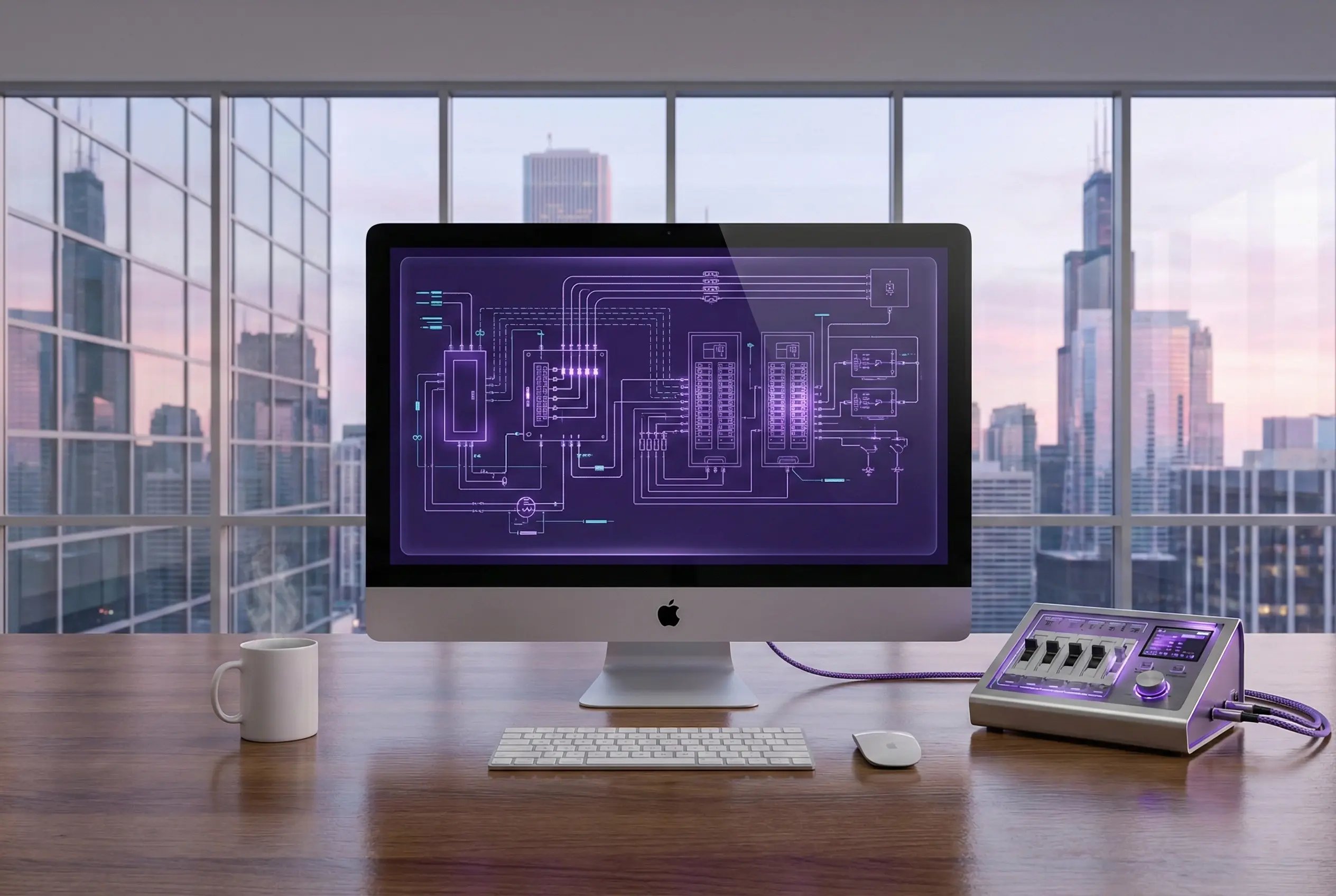

Profitability in electrical contracting depends on more than just accurate estimating; it requires effective management of scheduling, resources, and costs throughout a project's lifecycle. As commercial electrical projects become more complex, electrical project management software plays a vital role in maintaining control, visibility, and efficiency. These digital tools help contractors deliver projects on time and within budget, ultimately enhancing overall profitability.
By incorporating electrical contractor project management software that addresses the unique demands of electrical contracting, companies can streamline workflows, coordinate teams, and adapt to changing project conditions with greater agility. This integrated approach not only prevents costly delays and errors but also fosters clearer communication between field and office staff, contributing to smoother project execution and sustained financial success.
Table of Сontents
In electrical contracting, achieving profitability involves more factors than simply providing accurate estimates. While precise estimating forms an essential foundation, it does not guarantee financial success on its own. Contractors must also manage other critical aspects of project execution, such as scheduling, resource allocation, and cost control, to ensure that projects remain profitable throughout their lifecycle.
The complexity and increasing size of commercial electrical projects have made digital project controls indispensable. As projects grow in scale and intricacy, traditional methods of management may fall short in keeping up with evolving requirements. Digital solutions, including electrician project management software, help contractors monitor progress, manage changes, and maintain visibility into key project metrics. This digital oversight enables better decision-making and enhances the ability to deliver projects on time and within budget, strengthening overall profitability.
Electrical project management software is specifically designed to address the unique needs of electrical contracting projects. Unlike basic scheduling tools, job tracking applications, or generic project management platforms, this specialized software offers tailored functionalities that support the distinct workflows and requirements found in commercial electrical projects.
For example, a contractor working on a large hospital electrical system might use dedicated electrician project management software to schedule the delivery and installation of complex switchgear, track daily progress across multiple teams, manage frequent change orders as design requirements evolve, and ensure all related documents are up-to-date and accessible to both field and office staff. This level of integration and oversight helps prevent costly delays and errors, resulting in more efficient project execution and improved profitability.
While simple scheduling programs and job trackers may help organize tasks and monitor general progress, they often lack the depth needed for complex electrical projects. Electrical project management software stands apart by integrating advanced features that go beyond basic planning and tracking, ensuring comprehensive oversight of every aspect of the project lifecycle.
For example, consider a construction company managing a large office building project. By using electrical project management software, the team can track daily progress, monitor costs in real time, and manage change orders efficiently. When a client requests additional features mid-project, the change is documented and approved within the software, updating timelines and budgets instantly. This proactive approach helps the company avoid unexpected expenses, minimize delays, and ensure all work is billed accurately, ultimately increasing profitability while keeping stakeholders informed and reducing disputes.
Industry case studies highlight several key performance indicators (KPIs) and practical benefits gained from implementing electrical project management software. Key benefits include accelerated billing cycles, reduced losses due to better tracking of labor and materials, improved operational efficiency, and more predictable cash flow. Additionally, companies report stronger client relationships, the ability to set profitability benchmarks, and proactive identification of low-margin jobs for timely intervention.
For instance, a construction company using electrical project management software to oversee an office building project was able to track daily progress, monitor costs in real time, and efficiently manage change orders. When the client requested additional features mid-project, these were documented and approved within the software, which instantly updated project timelines and budgets. This approach helped the company avoid unexpected expenses, minimize delays, and ensure accurate billing—ultimately increasing profitability and reducing disputes, while fostering trust with stakeholders.
Industry case studies consistently show that implementing robust electrical project management software leads to faster billing cycles. Teams are able to minimize lost labor and material through improved tracking and automation, which translates into fewer missed deadlines and enhanced operational efficiency.
These improvements result in more predictable cash flow for organizations, allowing for better financial planning and stability. Furthermore, reliable project delivery and transparent communication foster stronger relationships with clients, building trust and long-term partnerships.
By leveraging data from real-world projects, companies establish clear profitability benchmarks. These benchmarks help track performance and guide future decision-making, ensuring that projects remain profitable and sustainable.
Data-driven project management enables companies to identify jobs with low margins before they become unprofitable. Early detection allows for timely intervention, reducing potential losses and improving overall project outcomes.
For commercial electrical contractors, effective project management hinges on several essential software features that support day-to-day operations and long-term project success.
Seamless integration with estimating and takeoff tools is critical. While solutions like Drawer AI are not project management tools themselves, they enable contractors to feed preconstruction data directly into the project management workflow. This integration facilitates a smoother handoff between preconstruction and project execution phases, minimizing data silos and reducing manual entry errors.
Accurate tracking of labor and materials is vital for cost control and efficient resource allocation. Electrical project management software should provide robust tools to monitor these elements throughout the project lifecycle.
Utilizing project templates helps standardize processes, ensuring consistency across projects and saving time during project setup. Templates enable teams to quickly replicate best practices and apply proven workflows to new jobs.
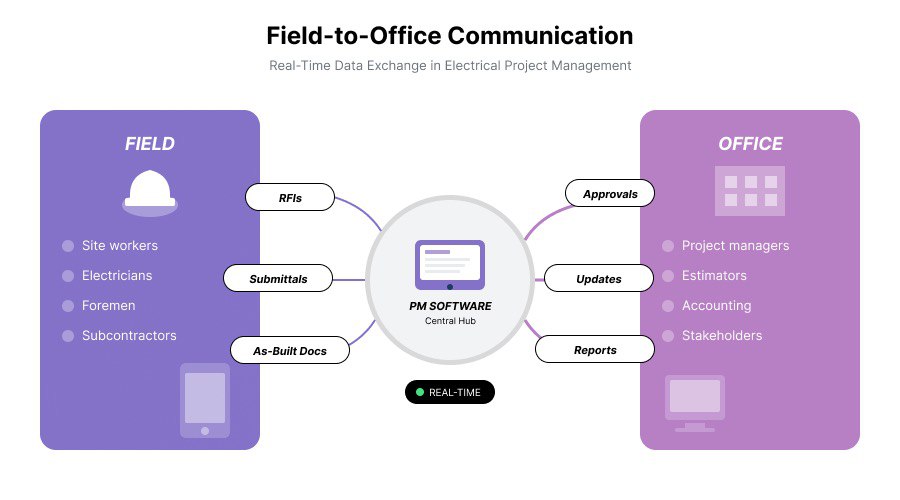
Mobile applications designed for field use empower teams to access project information, update statuses, and log activities in real time—directly from the job site. This capability enhances communication and keeps all stakeholders aligned.
Real-time reporting tools offer immediate visibility into project performance, supporting data-driven decision-making. These reports help identify issues early and allow for prompt corrective actions.
Effective change management and daily log features enable teams to document modifications and daily activities efficiently. This documentation ensures accountability, supports accurate billing, and provides a clear record of project progress and changes.
Successful implementation and change management in project management involve assessing organizational needs, piloting technology solutions, training teams, and establishing strong workflows. Designating champions to lead adoption and providing continuous measurement and feedback help ensure smooth transitions and maximize benefits.
For instance, a construction company introducing a new project management software might start by evaluating which features address their biggest challenges, such as labor tracking. They could roll out the software on one job site as a pilot, train field staff thoroughly, and appoint a project manager as a champion to answer questions and encourage use. By regularly reviewing dashboard metrics, the team can quickly spot issues and adjust processes, ensuring the new system delivers value across future projects.
Begin by conducting a thorough needs assessment to clearly define project requirements and identify areas where technology can provide the greatest benefits. Following this, implement pilot rollouts to test solutions in a controlled environment before wider adoption. This approach helps to minimize risk and uncover potential challenges early.
Effective training is essential to ensure that all team members are comfortable with new processes and tools. Select champions within the organization who can lead by example, support their peers, and drive engagement throughout the transition. These champions serve as key contacts for ongoing support and troubleshooting.
Establish clear workflows that link estimating with electrician project management software and back-end accounting systems. Creating these connections helps to maintain data integrity and ensures that information flows seamlessly across departments, improving coordination and accuracy throughout the project lifecycle.
Implement continuous measurement strategies to monitor key performance indicators and project metrics. Regular dashboard reviews provide actionable insights, enabling teams to track progress, identify trends, and make informed decisions to optimize project outcomes.
The integration of artificial intelligence into project management systems is transforming how electrical contracting companies analyze information. AI-powered insights enable teams to process vast amounts of data, identify patterns, and make more informed decisions, enhancing overall project performance.
Emerging technologies allow for predictive budgeting and scheduling, which helps contractors anticipate costs and timelines more accurately. By leveraging advanced analytics, project managers can proactively address potential issues and optimize resource allocation.
Enhanced connectivity between office and field operations provides real-time analytics, bridging communication gaps and ensuring that information remains consistent across all teams. This approach improves coordination, reduces errors, and supports better decision-making throughout the project lifecycle.
The shift toward mobile-first workflows enables field staff and office teams to access, share, and update project data from any location. Mobile solutions streamline processes, increase flexibility, and support more efficient collaboration, which is essential for successful project execution in electrical contracting.
In summary, modern project management tools are essential for achieving sustainable profitability in commercial electrical contracting. By embracing innovations such as AI-powered insights, predictive analytics, and mobile-first workflows, companies can streamline operations, make data-driven decisions, and improve project outcomes. Leveraging these tools not only enhances efficiency but also positions organizations to stay ahead in an increasingly competitive industry.
Ready to experience the future of project management? Book a Drawer AI demo today to see how seamless estimations and data exports can transform your project management process and seamlessly integrate with your end-to-end solution stack. Unlock the potential of smarter, more profitable electrical contracting projects with Drawer AI at the core of your technology strategy.

14425 Falcon Head Blvd
Building E, Suite 100,
Austin, TX 78738
Created by Estimators, Powered by AI and Innovation
Copyright © 2026 Drawer AI. All rights reserved.