AI



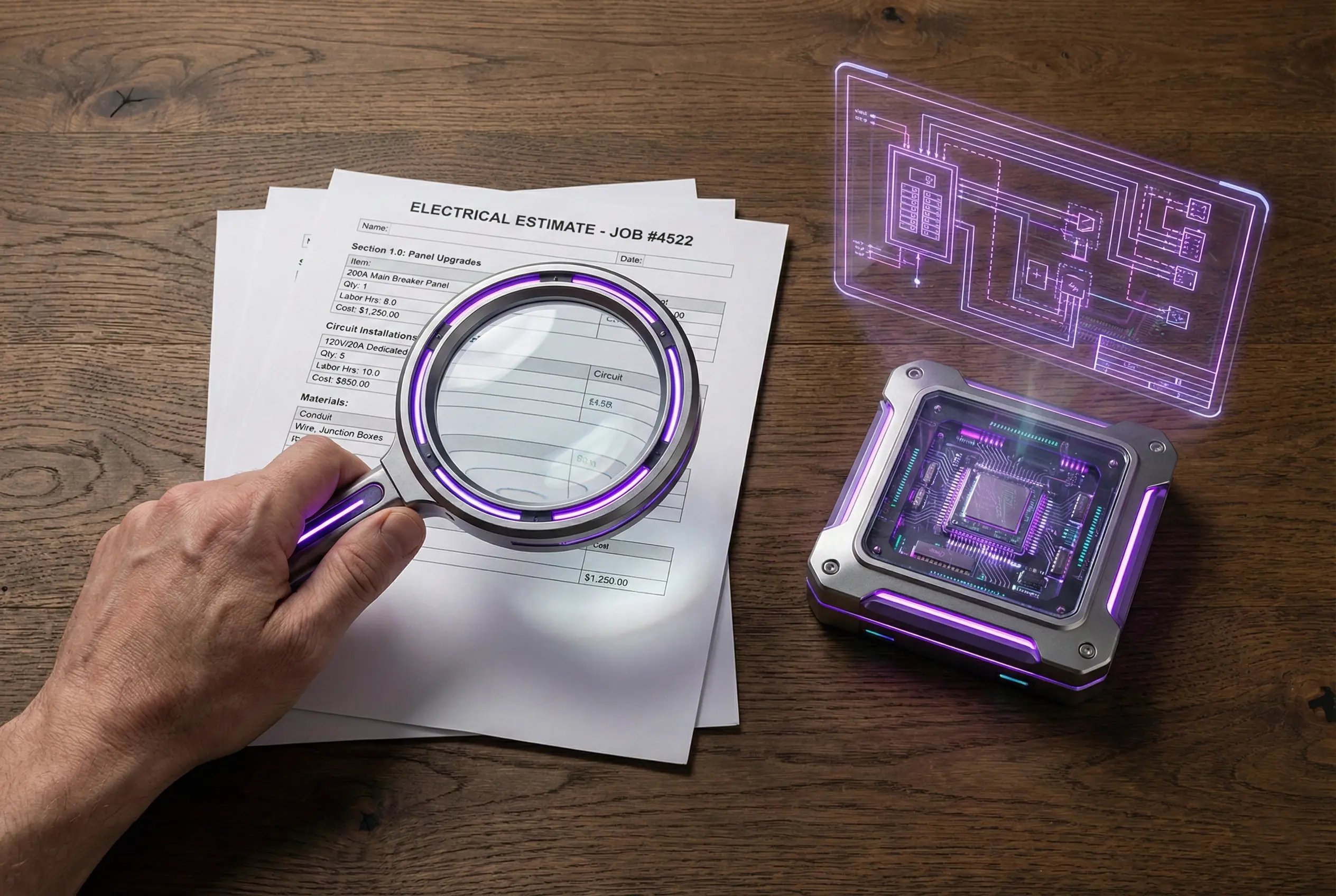

AI improves electrical work order software by automating task assignments and real-time updates, resolving issues like lost orders, delayed dispatch, poor field visibility, and slow billing. This streamlines workflows, reduces errors, speeds up response times, and boosts team efficiency and client satisfaction. As a result, AI is essential for contractors aiming to stay competitive.
Table of Сontents
Work order management for electrical contractors involves the end-to-end process of creating, tracking, and completing individual service tasks or repairs. Unlike scheduling, which focuses on assigning time slots and personnel availability, and unlike project-level management, which addresses the overarching planning and execution of multi-phase projects, work order management is specifically concerned with organizing, dispatching, and closing out each distinct service request or repair assignment. It is also separate from invoicing, which deals with billing and payment processes after work completion.
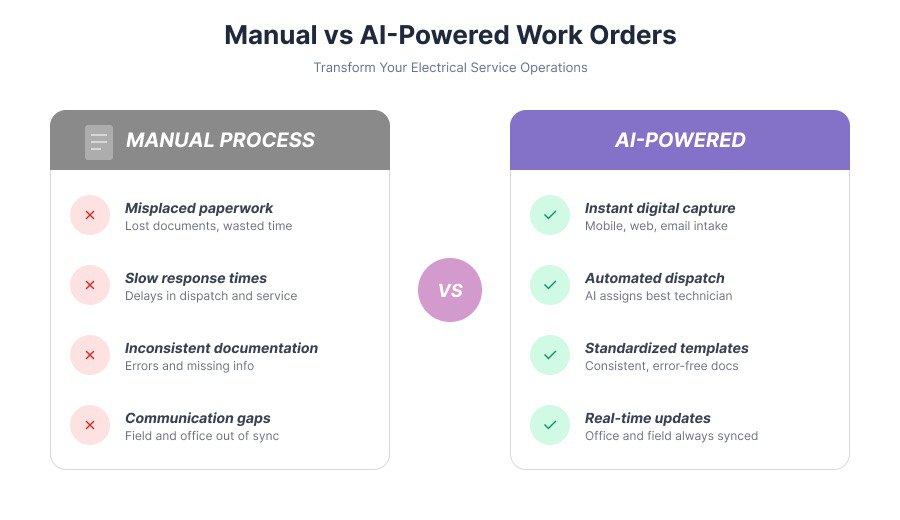
Electrical contractors often encounter frustrations when relying on manual or generic work order solutions. These methods can lead to issues such as misplaced paperwork, slow response times, inconsistent documentation, and difficulty tracking status updates. The lack of tailored features may result in inefficiencies, errors, and communication breakdowns, all of which can delay service delivery and impact client satisfaction.
Electrical work orders are distinct from general job management and broader project tracking in several ways. While job management may cover various operational aspects and project tracking oversees the entire scope of a large-scale initiative, electrical work orders are focused on the specific details of each service call, repair, or installation. They require precise documentation, adherence to safety standards, and coordination among field technicians and office staff.
For commercial and industrial electrical service work, the ability to handle work orders quickly and accurately is critical. Delays or mistakes can disrupt operations, pose safety risks, and lead to financial losses. Efficient processing ensures that service requests are addressed promptly, clients remain satisfied, and the contractor maintains a strong reputation in a competitive field.
For example, consider a commercial office building experiencing intermittent power outages. If the electrical contractor's work order process is slow or plagued by errors, tenants may face extended downtime, affect productivity and potentially leading to lost revenue. On the other hand, AI-driven work order management enables rapid dispatch and accurate tracking, allowing technicians to resolve issues quickly and minimize disruption.
In an industrial setting, such as a manufacturing plant, a faulty circuit could halt production. A manual work order might get misplaced or delayed, resulting in hours of lost output and significant financial losses. With AI-powered software, the system can automatically prioritize urgent repairs, route the assignment to the nearest available technician, and provide real-time updates to management, ensuring swift resolution and reducing costly downtime.
These scenarios illustrate how efficient work order processing directly impacts operational continuity, safety, and the bottom line for commercial and industrial clients.
AI-powered work order software introduces significant advancements to the workflow for electrical contractors by streamlining every stage of the process. With these solutions, work orders can be generated instantly through multiple channels, including mobile apps, web interfaces, or even email, ensuring that service requests are captured quickly and efficiently.
The software leverages artificial intelligence to drive scheduling, assign the most suitable technician, and optimize routing, which minimizes response times and maximizes resource utilization. By automating these critical steps, contractors can reduce human error and ensure that the right personnel are dispatched to the appropriate job sites.
In addition, the software automates the capture of time and materials, streamlines the approval process through digital signatures, and provides real-time updates to all stakeholders. Seamless synchronization of data between office and field teams ensures that everyone has access to the latest information, enhancing communication and enabling faster decision-making.
Automated time and materials capture eliminate manual entry errors by tracking technician hours and inventory usage directly within the work order system. Digital approvals, such as electronic signatures, accelerating authorization processes and reduce paperwork, allowing for faster job completion and billing cycles. Real-time updates keep all parties informed of work order status, changes, or completion, ensuring transparency and timely communication. Seamless data synchronization between office and field teams guarantees that everyone is working from the most current information, which supports efficient collaboration and enhances overall workflow reliability.
When evaluating AI-powered work order software for commercial and industrial electrical service, certain features are essential to maximize efficiency and reliability. Below are the critical elements to consider:
Top solutions offer customizable templates for work order creation, enabling contractors to tailor requests to specific job requirements. This flexibility streamlines the initiation process, ensures consistency, and reduces the likelihood of errors when capturing service details.
Integration capabilities are vital for seamless workflow management. The best platforms interface effortlessly with estimating and job costing software, allowing for accurate resource allocation and financial tracking. Compatibility with tools like Drawer AI enhances productivity by linking work order data directly to cost analysis and project estimation systems.
Efficient mobile access is a cornerstone of modern work order software. Field technicians benefit from intuitive mobile interfaces that support offline synchronization, ensuring continued functionality even in areas with limited connectivity. Key features include real-time status alerts and the ability to upload photos and documents directly from the job site, which support clear communication and accurate reporting.
Advanced analytics empower contractors to monitor and improve their operations. Leading solutions provide detailed insights into repeat issues, job completion times, and resource utilization, enabling continuous process optimization and informed decision-making.
Implementing AI-powered electrical work order software delivers several tangible business benefits for commercial and industrial electrical service providers. These advantages directly address common operational challenges and contribute to improved overall performance.
The automation and streamlined processes provided by advanced software significantly decrease administrative burdens. By minimizing manual data entry and paperwork, teams experience a drastic reduction in lost work orders and time spent on routine tasks. This efficiency allows staff to focus on higher-value activities and ensures critical information is captured reliably.
Improved work order management leads to better customer service through more consistent and timely project completions. Clients benefit from greater transparency throughout the service process, with clear updates and status reports. This fosters trust and strengthens business relationships.
Optimized assignment and data-driven scheduling ensure that field teams are deployed effectively. Higher utilization rates are achieved by matching technician availability and skills to specific job requirements, reducing downtime and maximizing productivity.
The integration of work order data with billing systems supports more accurate invoicing and faster turnaround times. Prompt billing not only improves cash flow but also reduces disputes, as clients receive clear and timely documentation of completed work.
Artificial intelligence is rapidly transforming the landscape of electrical service work. This article examines emerging trends, including automation, predictive maintenance, enhanced safety protocols, and the evolving role of skilled professionals as AI technology becomes more integrated into daily operations.
AI-powered systems are increasingly leveraging historical work order data to forecast future scheduling needs. By analyzing past trends and technician performance, the software can anticipate peak periods and proactively allocate resources. This predictive approach helps ensure that the right number of technicians are available at the right times, minimizing delays and enhancing operational efficiency.
Advanced AI algorithms are now capable of automatically assessing incoming work orders and recommending the most suitable technicians for each job. These recommendations take into account factors such as technician skills, certifications, location, and past job performance, ensuring that assignments are optimized for both efficiency and quality of service.
Automation is streamlining communication by sending real-time updates to clients and field teams. Status changes, schedule adjustments, and completion notifications are delivered automatically, keeping all stakeholders informed throughout the service process. This not only improves transparency but also reduces the need for manual follow-ups.
AI integration is strengthening the connection between work order management, asset tracking, and preventative maintenance schedules. By monitoring equipment status and maintenance history, the software can trigger service orders automatically when potential issues are detected. This proactive approach helps prevent equipment failures and supports the long-term reliability of electrical systems.
Imagine a commercial building where AI-powered asset tracking monitors the performance of backup generators. The system continuously analyzes sensor data, such as temperature, vibration, and runtime hours. If the AI detects that a generator’s vibration patterns indicate potential bearing wear—well before a breakdown occurs—it automatically creates a work order for preventative maintenance. The assigned technician receives a notification, the maintenance is scheduled before any failure happens, and the building avoids unexpected power outages and costly emergency repairs.
As demonstrated throughout this article, AI-powered electrical contractor work order software is rapidly becoming the new standard for fast and flawless commercial and industrial electrical service delivery. By automating scheduling, optimizing technician assignments, streamlining communication, and enabling proactive asset maintenance, these solutions drive efficiency while reducing downtime and costly repairs.
Ready to experience how Drawer AI can transform your electrical service operations? Drawer AI empowers your team to minimize downtime, prevent costly breakdowns, and deliver unmatched reliability. Request a live demo today or explore our pricing options to see firsthand the game-changing benefits of seamless, AI-driven work order management. Take the next step toward smarter, safer, and more reliable service delivery!

14425 Falcon Head Blvd
Building E, Suite 100,
Austin, TX 78738
Created by Estimators, Powered by AI and Innovation
Copyright © 2026 Drawer AI. All rights reserved.