AI




In today’s construction industry, staying competitive requires precise forecasting and the ability to adapt to changing project conditions. Artificial intelligence (AI) is transforming how companies measure, analyze, and improve labor productivity, bridging the gap between traditional estimating methods and real-world performance. This overview explores the role of AI-powered field feedback loops in enhancing the accuracy and reliability of c.
Table of Сontents
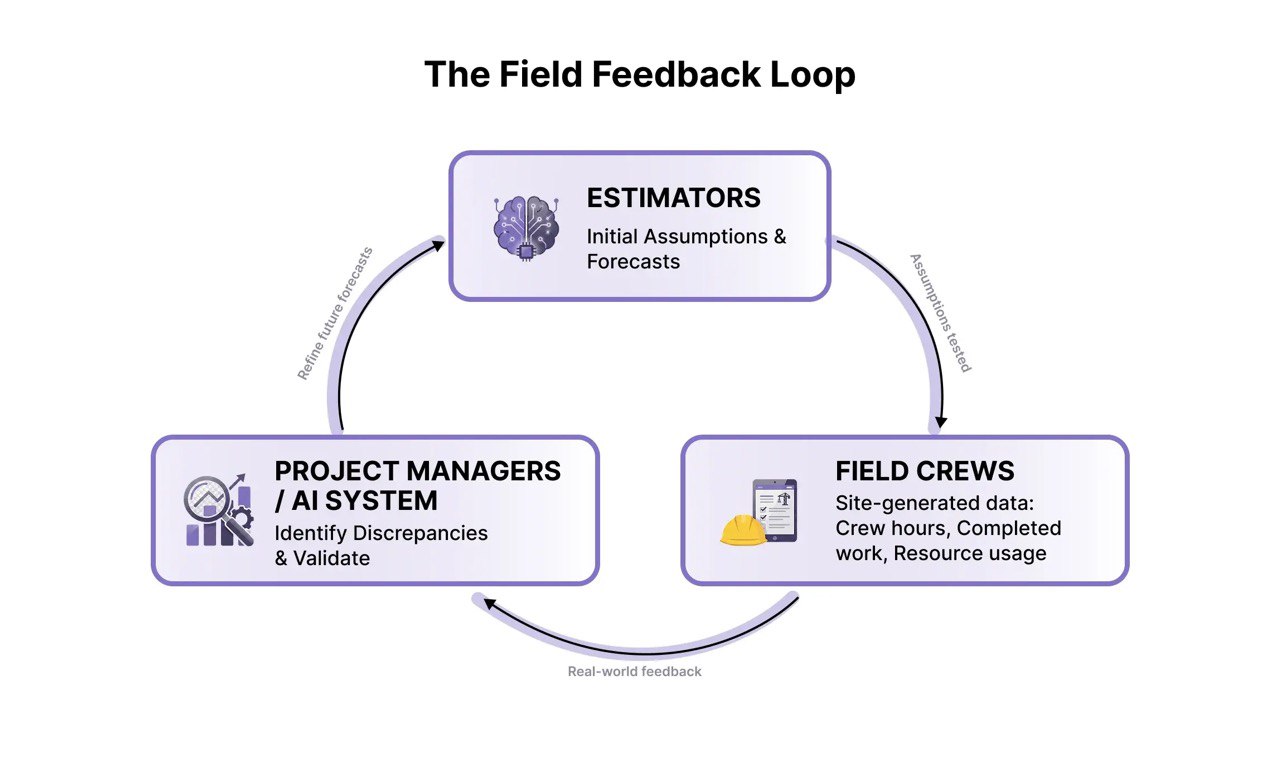
A field feedback loop is a continuous data cycle connecting estimators, project managers, and field crews. Within this system, information constantly flows among these groups, ensuring that everyone is aligned throughout the project lifecycle. The loop utilizes site-generated data—such as crew hours, completed work quantities, and resource usage—to test and validate the initial assumptions made during the estimating phase. This real-world feedback helps identify discrepancies and refine future forecasts, making estimates more reliable and responsive to changing project conditions.
By leveraging artificial intelligence, these feedback loops become even more powerful. AI automatically compares estimated labor productivity with actual field performance, rapidly highlighting deviations and trends. This automation streamlines the identification of where estimates diverge from reality, enabling dynamic updates to labor rates and productivity benchmarks. As a result, AI-driven feedback loops continuously improve forecasting accuracy and help construction teams adapt quickly to on-site challenges.
Traditional estimating practices are often hindered by several persistent challenges. Estimators frequently depend on outdated production rates, which may not accurately reflect current field conditions or technological advancements. Additionally, the use of manual field reports can introduce errors and inconsistencies, as these reports vary in quality and timeliness. Feedback from the field is often irregular, making it difficult to establish a reliable basis for future estimates.
Crew efficiency is another area where significant fluctuations occur. The complexity of a project can require specialized skills or additional coordination, impacting how quickly and effectively crews complete tasks. Weather conditions also play a major role—unpredictable rain, heat, or cold can slow progress or force work stoppages. Furthermore, the composition of teams, including the experience level and cohesion among crew members, can dramatically affect productivity. These factors combine to make maintaining accurate and responsive productivity estimates a continual challenge for estimators in the construction industry.
AI systems in construction harness a wide spectrum of data inputs, including time tracking systems that record crew hours, daily reports documenting progress and challenges, jobsite sensors monitoring equipment usage and environmental conditions, and mobile data entries captured directly from the field. This diverse stream of data gives AI a comprehensive, real-time view of project performance.
Once collected, AI algorithms analyze these data sources to uncover meaningful productivity trends. For example, the system can compare crew hours against quantities of work completed—such as linear footage installed or the number of devices put in place—to calculate actual work rates. This analysis can be further broken down by trade (e.g., electrical, plumbing), project phase (such as rough-in, finishing), or by the size and composition of each crew. AI also examines patterns of schedule slippage, identifying if certain teams or tasks are consistently behind, as well as evaluating how efficiently resources like materials and equipment are allocated and utilized across the jobsite.
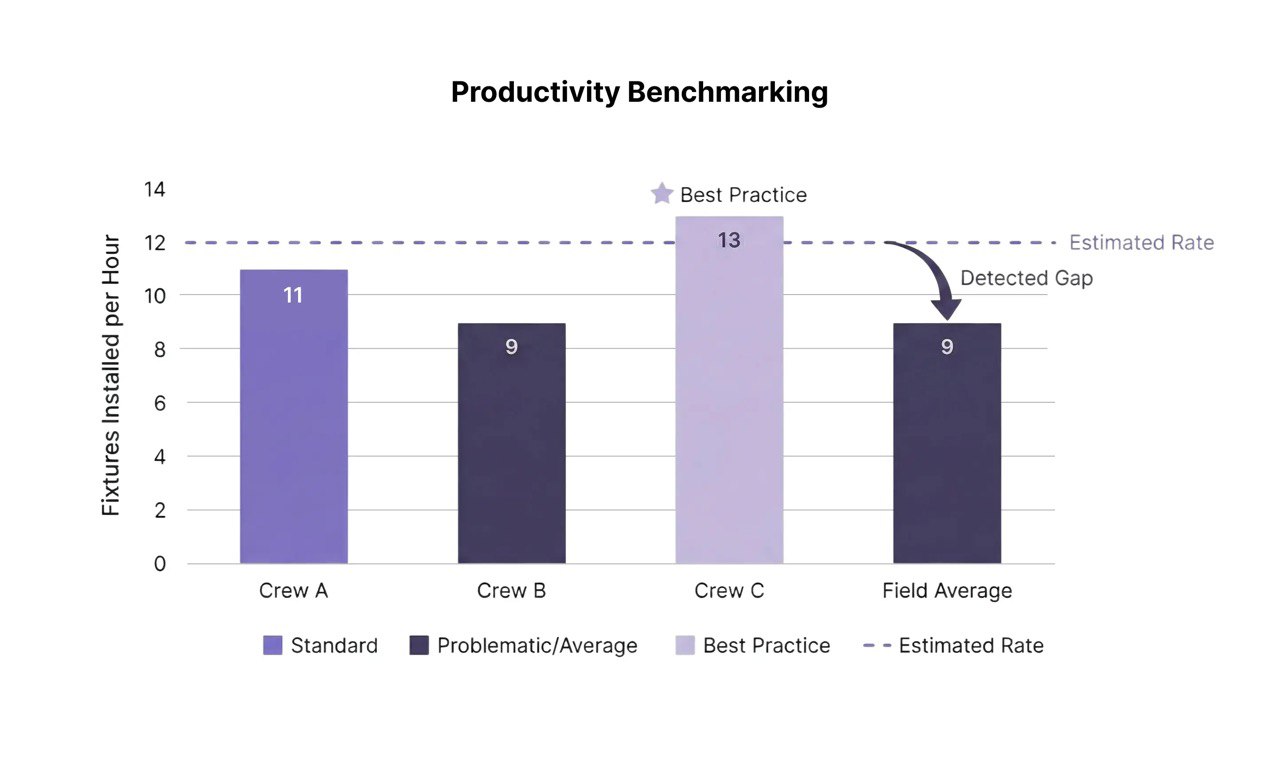
Machine learning models add another layer of sophistication. These models continuously learn from historic and current data, flagging deviations between estimated productivity and actual results as soon as they occur. For instance, if an estimate assumes a rate of 12 fixtures per hour but field data reveals only 9 are being installed, AI identifies this gap in near real-time. The models then dynamically update average labor rates based on the latest field performance, ensuring that future bids reflect current realities rather than outdated benchmarks.
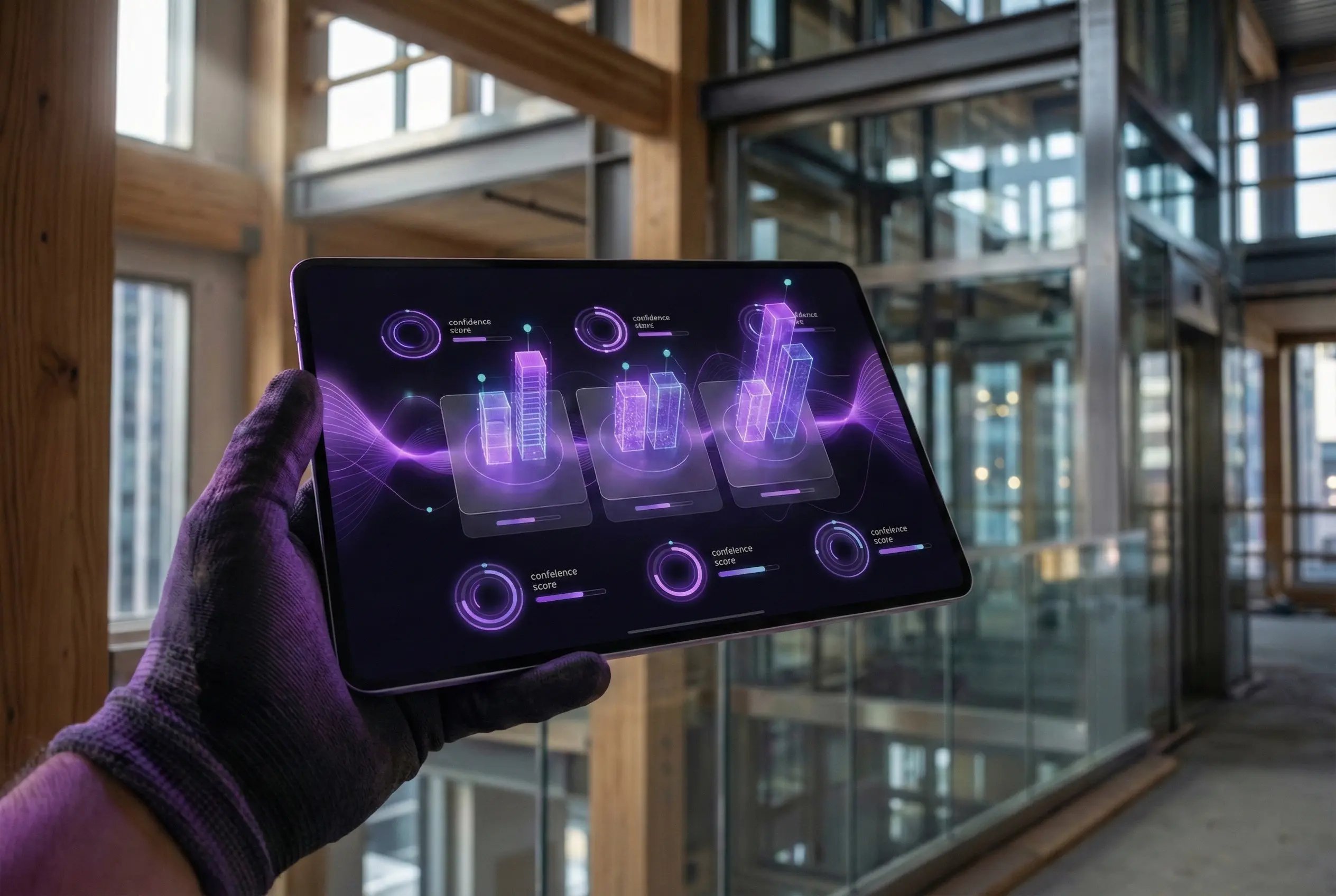
Beyond immediate corrections, AI systems use predictive analytics to forecast where overruns such as labor inefficiencies or budget excesses are likely to happen. By spotting trends early, teams can intervene before small issues snowball into larger problems. AI transforms raw project data into actionable insights, such as crew performance charts, deviation percentages, and predictive confidence scores, which help project managers and estimators optimize planning, resource allocation, and bidding strategies.
Real field metrics are seamlessly integrated into Drawer AI’s estimating environment, creating a dynamic feedback loop between actual jobsite performance and future project planning. As field data—such as crew hours, quantities installed, and progress reports—is captured, Drawer AI automatically ingests this information and incorporates it into the estimation process. This integration ensures that each completed project provides fresh, accurate data to recalibrate labor productivity benchmarks, making future estimates increasingly precise and responsive to on-the-ground realities.
With every project completed, Drawer AI continuously updates and refines labor benchmarks. The system learns from real-world outcomes, adjusting unit labor rates and productivity standards to reflect the latest field performance. This ongoing recalibration means that estimates are not static; instead, they evolve in real time, strengthening the reliability of future bids and optimizing resource allocation.
AI then transforms these raw field metrics into actionable visual insights. Drawer AI generates crew performance charts that highlight individual and team productivity, deviation percentages that pinpoint where actual results differ from estimates, and predictive confidence scores that quantify the reliability of upcoming forecasts. These visual tools empower estimators and project managers to quickly assess field performance, identify trends, and make informed decisions to enhance project outcomes.
Imagine an electrical estimator who thinks crews can install 12 fixtures every hour. Yet, after reviewing actual job-site results, it turns out they only average 9 per hour. With AI tools, these gaps are spotted quickly, allowing future estimates to be adjusted according to real performance, which helps safeguard profit margins.
For instance, Drawer AI can track installation rates across different electrical teams working on similar jobs. If Crew A installs 11 fixtures per hour, Crew B does 9, and Crew C completes 13, AI-generated productivity scores highlight which teams excel. The system also reveals which techniques, task sequences, or tools drive greater efficiency. With these insights, management can pinpoint and document the most effective approaches, creating standards that help boost performance throughout all teams.
To effectively integrate field tracking tools—such as time sheets, GPS logging, and production reports—with AI analytics systems, organizations should follow a structured adoption process. Begin by normalizing data collection on-site to ensure consistency and reliability in the information gathered.
Next, align cost codes between estimating and job tracking systems to streamline data flow and ensure accurate comparisons. It’s recommended to start with pilot projects to train AI datasets, allowing the system to learn from real-world scenarios before broad implementation. Finally, leverage insights generated by AI to foster stronger collaboration between estimators and operations teams, ensuring that decisions are informed by both predictive analytics and on-the-ground realities.
Start with pilot projects for dataset training, allowing the AI system to learn from real-world scenarios and refine its predictive capabilities. Use insights gained from these pilots to drive stronger collaboration between estimators and operations teams, ensuring that both planning and execution benefit from accurate, data-driven feedback.
Looking ahead, the evolution of predictive AI agents in construction management will fundamentally transform how labor resources are planned and deployed. These advanced systems will not only analyze historical performance data but also actively recommend the most effective crew compositions, optimal task sequencing, and strategic resource allocations tailored to the unique requirements of each project. By leveraging AI-driven insights, managers can assemble teams with complementary skills, schedule work in the most productive order, and allocate equipment or materials precisely where and when they are needed.
Moreover, integrating predictive AI with Building Information Modeling (BIM) and digital scheduling tools will enable automated productivity modeling. This powerful combination allows for real-time simulations and scenario planning, where the impact of different crew mixes, work sequences, and resource strategies can be visualized and optimized before work begins. As a result, project teams will move beyond traditional reactive reporting—where issues are only identified after they occur—to a proactive approach that anticipates challenges and maximizes labor efficiency from the outset.
Ultimately, these innovations will help organizations not only improve project outcomes and safeguard profit margins but also foster continuous improvement by setting new standards for data-driven decision-making and operational excellence in the field.
AI field feedback loops empower contractors to continuously enhance the accuracy of their estimates and drive profitability by providing timely, actionable insights based on real-world performance data. By closing the gap between planned and actual outcomes, these systems support smarter decision-making, promote operational excellence, and enable ongoing process improvements across all project teams.
Ready to take your labor benchmarking and project management to the next level? Explore Drawer AI today and request a demo to see firsthand how AI-driven feedback loops can transform your business. If you’d like to see real labor feedback loops and benchmarking examples in a live environment, you can also register for an upcoming Drawer AI webinar to walk through workflows and ask questions directly to the team.

14425 Falcon Head Blvd
Building E, Suite 100,
Austin, TX 78738
Created by Estimators, Powered by AI and Innovation
Copyright © 2026 Drawer AI. All rights reserved.